
What a Full House Tells You About Your Home
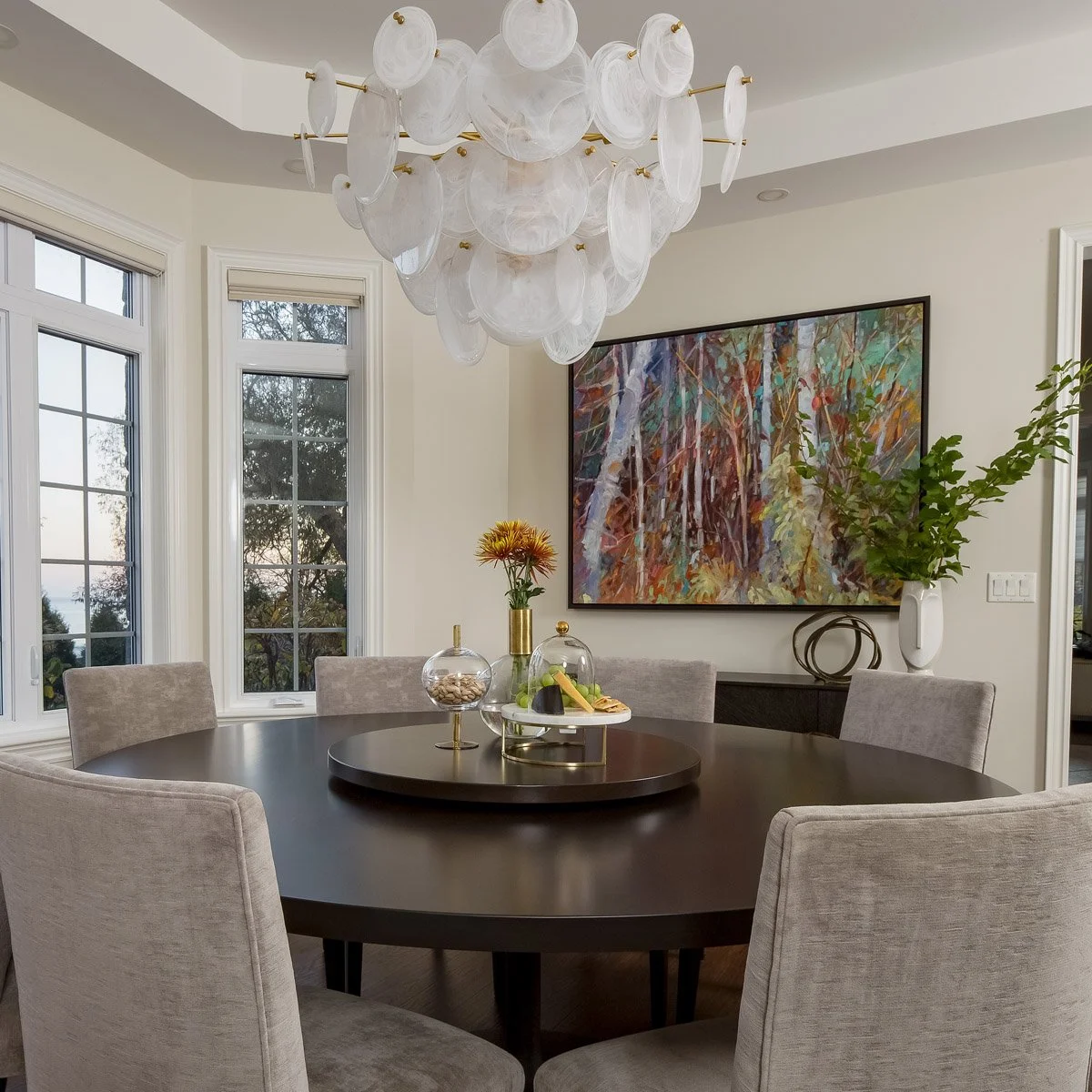
A round table seats everyone face to face, so the conversation never splits down the middle.
By now the extra chairs are back in the basement and the good platter is washed and put away. But if you hosted this weekend, you probably noticed a few things about your home that you never notice on an ordinary Tuesday.
A house full of people is the most honest assessment a home ever gets. Everyday life is forgiving. You know where the keys go, which lamp to switch on, which chair is the comfortable one. Guests know none of that. They walk in, look for a place to set things down, look for somewhere to sit, and move wherever the room lets them. What works, works for everyone. What doesn't shows up right away.
After nearly 25 years in other people's homes, I hear the same handful of things when clients describe a holiday that felt harder than it should have. Here is what to pay attention to while the weekend is still fresh.
The entry couldn't handle the arrival
Coats ended up on the bed. Boots piled up by the door. Someone stood holding a casserole dish with nowhere to put it down while they took off their scarf.
The entry is the first space every guest uses, and in most homes it is sized for the household, not for a houseful. In an Ontario autumn, everyone arrives with layers and wet shoes. A bench to sit on, a surface wide enough to set something down, a closet edited before people arrive, and a rug that can take a wet boot change the first five minutes of every visit.
Everyone ended up in the kitchen
This isn't a failure. People go where the activity and the light are. But if guests stood around the island for three hours while the living room sat empty, the living room was telling you something.
Usually it is the arrangement. Seating that faces a television, chairs pushed back against the walls, a sofa too far from anything else to hold a conversation. A living room that works for a crowd has seats close enough to talk without raising your voice, grouped so people face each other rather than the screen.
There weren't enough places to sit
The dining chairs got carried into the living room. Someone perched on the arm of the sofa all evening. Count the seats you actually have, and then count the kinds. A pair of ottomans, a bench, or a side chair light enough to move does far more for a gathering than one more large sofa, and they earn their place on ordinary days too.
The lighting didn't hold up after dark
Dinner started in daylight and finished in the dark, and somewhere in between someone switched on the overhead light. If the room suddenly felt flat and glaring, that is the most common problem I see. A room meant for evenings with people needs light at several heights: lamps, something over the table on a dimmer, and very little relying on the ceiling.
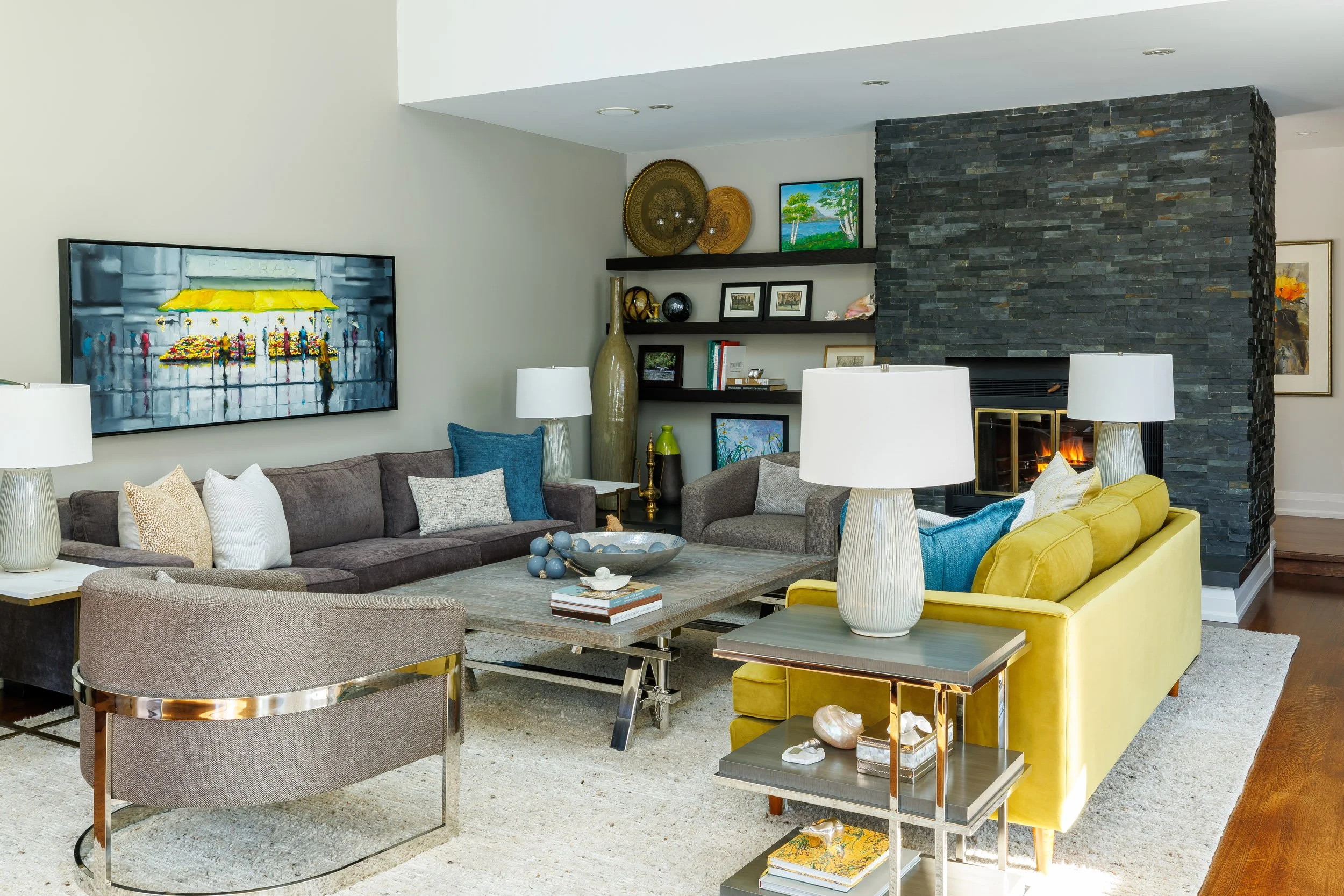
Four places to sit, all facing each other. The room invites people in rather than lining them up against the walls.
The powder room was doing more than you thought
It is the room every guest visits, alone, with the door closed and time to look around. Notice what they found. Was there a proper hand towel, somewhere to set down a phone, a light that was kind rather than clinical? It is a small room, and it shapes how the whole house is remembered.
The table was the wrong size for the occasion
If the table needed the card table pushed against one end, or the leaf hasn't fit through the door in years, that is worth noting too. I wrote about dining rooms last fall in Is It Time to Update Your Dining Room?, so I'll only say this here: plan for the gatherings you actually host, not the one you imagine.
Write it down this week
These impressions fade quickly. By December, with the next round of gatherings on the calendar, you will remember that the weekend felt crowded but not why.
So take ten minutes this week and write down what you noticed: where people stood, where they couldn't sit, what you apologized for, what you wished you had. That list is the most useful design brief you will ever write, because it comes from how your home is actually lived in rather than how it looks in a photograph.
It is also exactly what I ask about in a first conversation. Who comes over, how often, and what happens when they do tells me more about what a home needs than any inspiration image.
At Yassein Interiors in Whitby, Ontario, I work with homeowners across the GTA and Durham Region whose homes need to hold more than the people who live there: family dinners, holidays, and the friends who stay late.
Gaddah Yassein is an interior decorator and the founder of Yassein Interiors, a boutique full-service decorating studio based in Whitby, Ontario. She serves clients across the GTA, Durham Region, and Northumberland County. If you're thinking about a project — condo, house or cottage — we’d love to talk.