
When the Architecture Gives You Nothing: How to Bring Personality Into a Condo
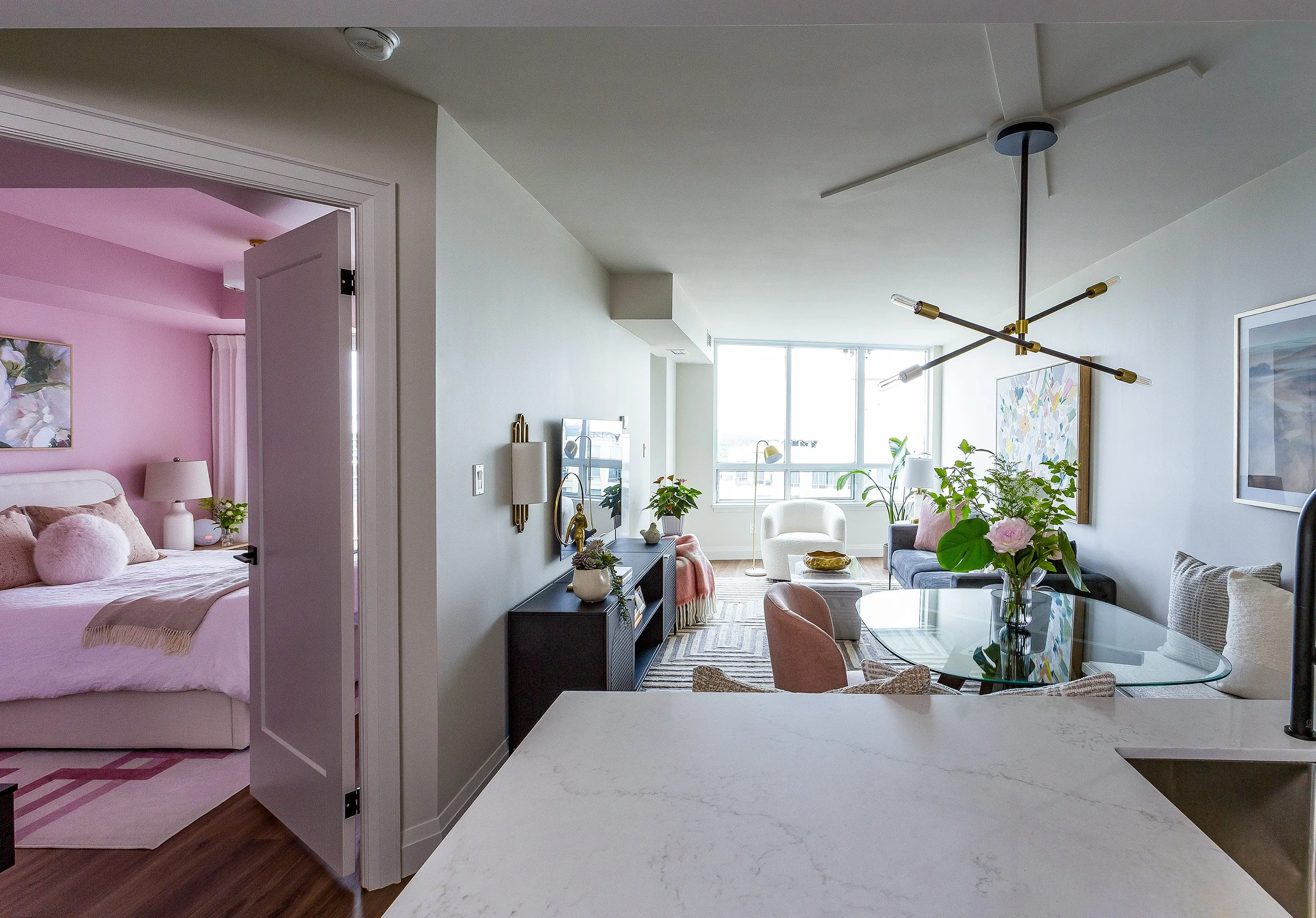
You've walked into a room and felt it immediately. Something about it just works. The proportions feel right, the light is doing something generous, and every surface looks considered without looking fussed over. You can't quite name what it is — you only know you want to stay.
This is not accidental. And it has almost nothing to do with budget.
After two decades of working inside people's homes — moving through rooms that hummed with life and rooms that never quite settled — I've noticed the same handful of qualities showing up again and again in the spaces that land well. They aren't trends. They aren't rules. They're more like habits of mind that get expressed through furniture and colour and light.
Here's what I keep seeing.
Colour Does What the Architecture Can't
In a house with beautiful bones — crown mouldings, a fireplace surround, original hardwood floors — the architecture is already doing some of the work. It creates visual interest, warmth, a sense of history. In a condo, you start from neutral. And neutral, left alone, stays neutral.
Colour is the first tool I reach for, and the most powerful one. Not because I believe every room needs to be painted a dramatic shade, but because colour is the most efficient way to give a space a temperature, a mood, a feeling of belonging to someone. A warm terracotta in a dining room, a confident navy in a study, a soft blush in a bedroom — each one signals immediately that a choice was made, and that the person who made it has a point of view.
I am not afraid of colour. What I'm afraid of is a room that doesn't feel like anything — and in a condo, neutral walls without strong decisions elsewhere will give you exactly that.
The Rug Is the Room
If there is one investment I would never skip in a condo, it is the rug. More than any other element, a great rug gives a space its foundation — not just visually, but physically. It defines where a room begins and ends. It anchors the furniture. It introduces texture, warmth, and personality underfoot in a way that generic flooring never can.
In a condo, the rug is doing structural work. Without it, furniture floats. Rooms feel unresolved. The sofa and the coffee table and the chairs are just objects in a space rather than a composed arrangement.
I consistently advise clients to buy the best rug they can afford, and to get the scale right. The single most common rug mistake I see is choosing one that's too small — a rug that doesn't extend under the front legs of the sofa, that leaves too much floor exposed, that shrinks the room rather than grounding it. In a condo, where every square foot matters, a well-scaled rug is transformative.
Drapery Transforms a Window Into a Feature
Most condos have good windows. Natural light is one of the genuine advantages of condo living, particularly in a high-rise. But a bare window — or worse, a window with a generic blind — does nothing for the room beyond letting light in.
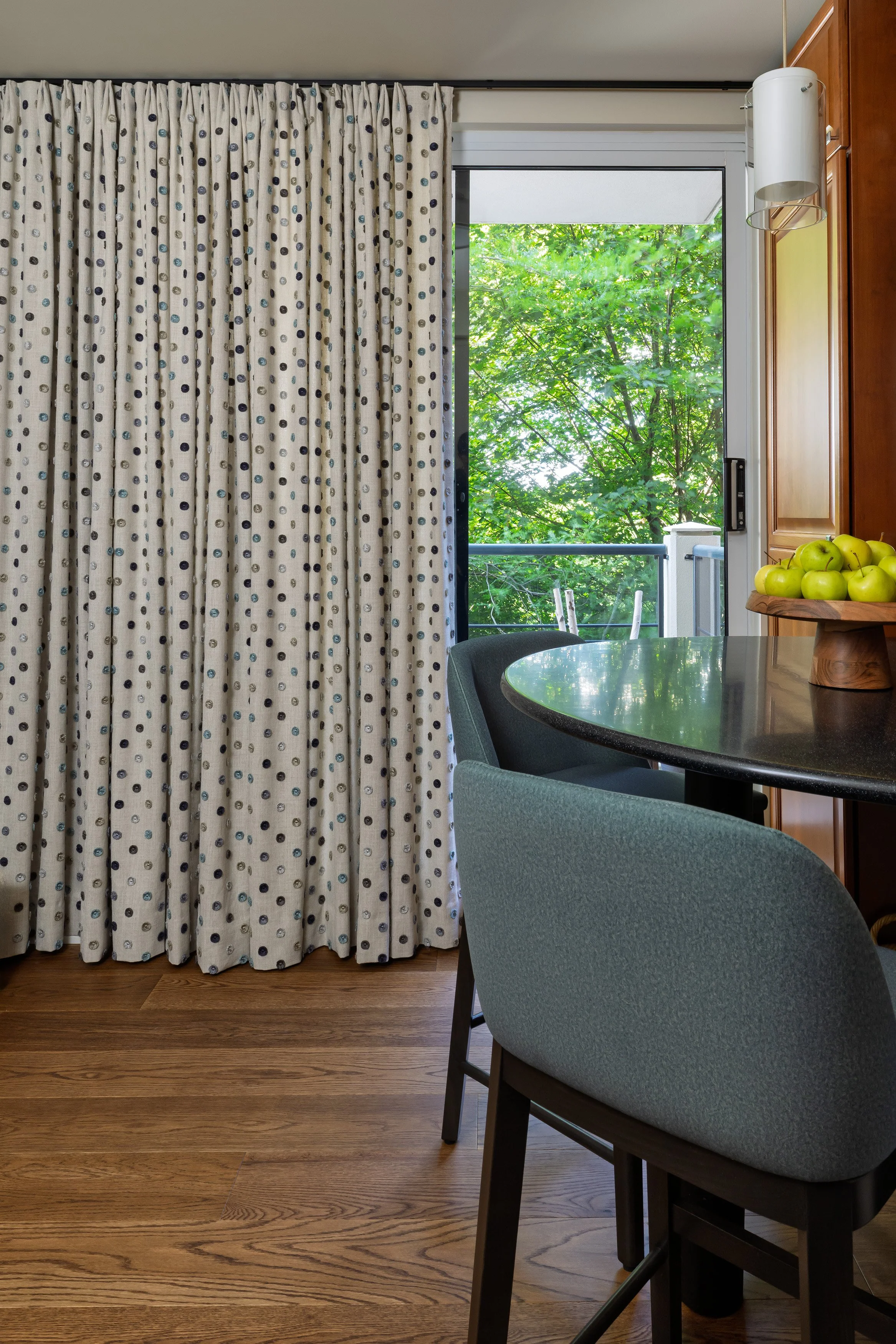
Well-made drapery changes everything. Hung high, close to the ceiling, and wide enough to clear the glass when open, drapery adds height, softness, and a sense of considered intention that nothing else quite replicates. It transforms a window from a functional opening in a wall into a genuine feature of the room.
For clients who are renting, this is also one of the most practical investments you can make: good drapery is entirely portable. It comes with you to your next home, designed to work beautifully in the context it was made for, and adaptable to a new one. It is not money spent on someone else's apartment. It is money spent on your home — wherever that happens to be.
Art and Objects Are Where You Live
I tell every client the same thing: buy what you love, not what matches.
Art and objects are where personality lives in a home. They are the things that make a room unmistakably yours — not a room from a catalogue, not a room that could belong to anyone. When someone walks into a well-decorated home and says this feels like you, they are almost always responding to the art on the walls, the books on the shelves, the objects on the console table. The furniture is the foundation. The art and objects are the life.
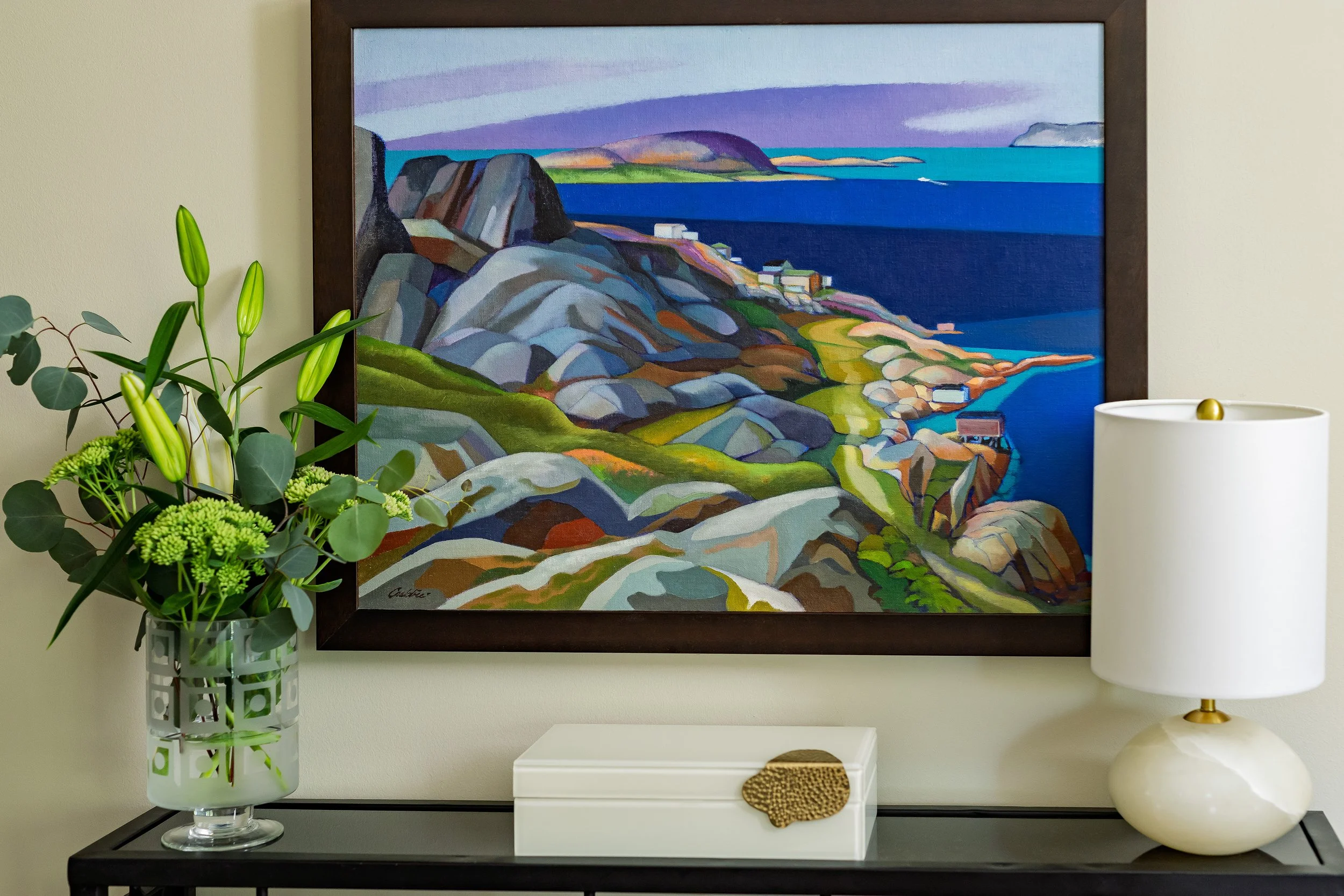
In a condo, where the architecture offers no focal points, art becomes structurally important. A large painting above a console table does the work that a fireplace might do in a house — it gives the room a destination, a place for the eye to land. I often advise clients to lead with a piece of art they love and build the room around it, rather than selecting furniture first and hunting for art to fill the gaps. The result is a space that feels genuinely inhabited rather than assembled.
Quality Matters More, Not Less
There is a temptation, particularly in a smaller space, to spend less — to treat a condo as a temporary situation, a stepping stone, a place that doesn't deserve the same investment as a house. I understand the logic and I disagree with it entirely.
In a smaller space, every piece is more visible, more used, and more consequential. A sofa that isn't quite right is harder to ignore in a condo than in a large house where you can close the door on a room. Fast furniture — pieces chosen for availability and price rather than quality and longevity — undermines everything around it. It doesn't matter how good the rug is, how carefully you chose the drapery, how much you love the art. If the sofa is wrong, the room is wrong.
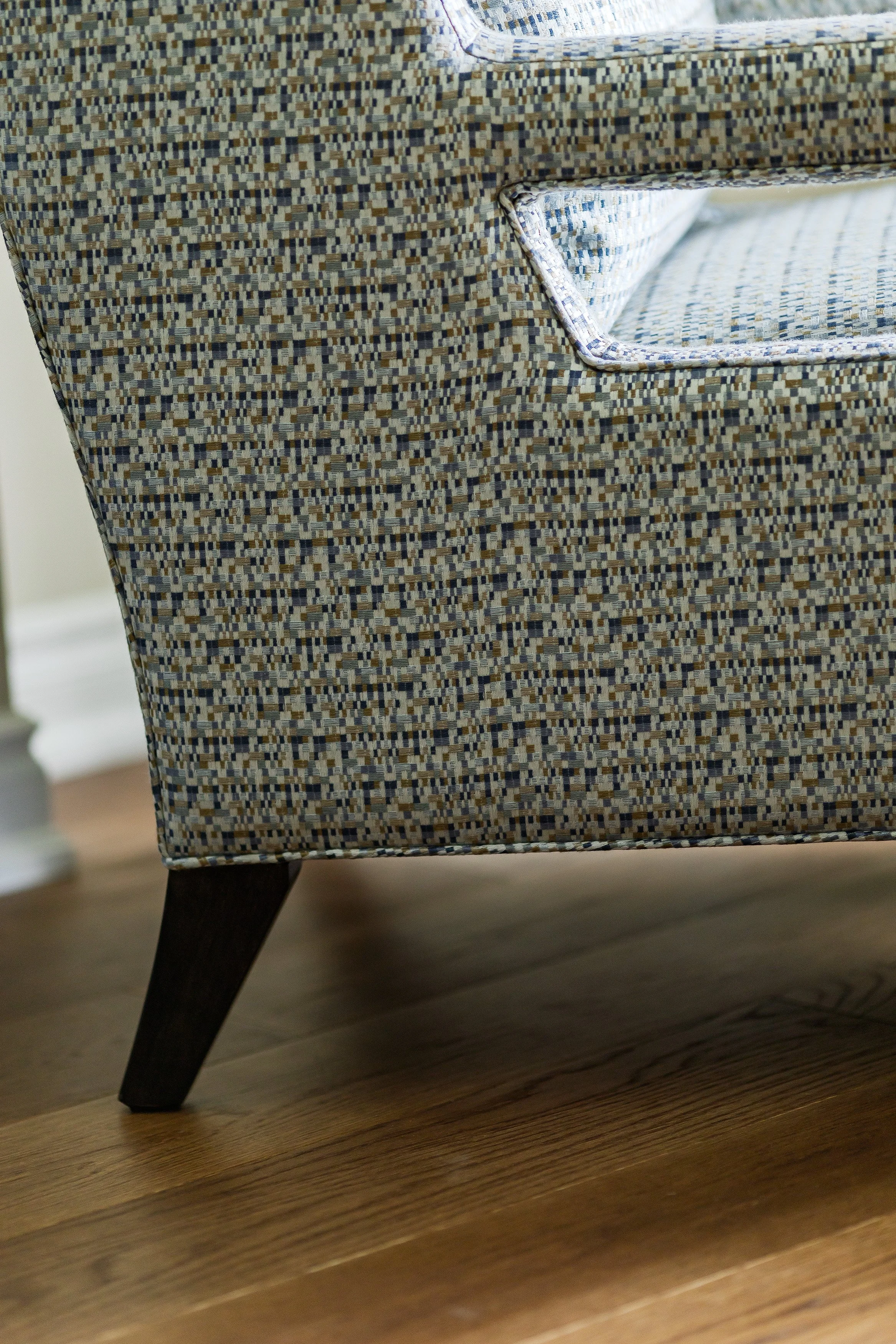
The investment case for quality in a condo is actually stronger than in a house. Fewer pieces means each one carries more weight. Buying well once is more economical, more sustainable, and more satisfying than replacing mediocre pieces every few years.
The Blank Canvas Is the Point
A condo without architectural character is not a limitation to design around. It is a space where every decision is yours — where nothing is predetermined, nothing has to be worked with or worked around, nothing is fixed except the windows and the walls.
That is an enormous amount of creative freedom. And in the hands of someone who knows how to use it, a condo that starts from nothing can end up feeling more personal, more considered, and more alive than a house full of inherited details.
This is exactly the kind of project I love most. Not because it's easy — it isn't — but because when every decision matters, every decision has the potential to be exactly right.
Gaddah Yassein is an interior decorator and the founder of Yassein Interiors, a boutique full-service decorating studio based in Whitby, Ontario. She serves clients across the GTA, Durham Region, and Northumberland County. If you're thinking about a project — condo or otherwise — we’d love to talk.
At Yassein Interiors in Whitby, Ontario, we love working with condo clients across the GTA and Durham Region — blank canvases that become some of our most personal and deliberate spaces.