
The Art of Wintering Well

There is a moment every November when the light changes. The afternoons shorten. The air sharpens. And the home you have been living in all summer quietly asks to become something different.
I look forward to this shift every year, not because I love the cold — I am an interior decorator in Whitby, Ontario, serving clients across the GTA and Durham Region — not a polar explorer. Winter is when a thoughtfully designed home reveals its full power. In the warmer months, we live partly outside. In winter, we live entirely within our walls. And the homes that are built to nurture you through that season are the ones that feel the most like a gift.
If your home does not feel like a refuge right now — if walking through the door at the end of a long day does not make you exhale — it might not need a renovation. It might just need to be layered, adjusted, and attuned to the season.
Here is how I think about it, sense by sense.
Touch: The Layers You Reach For
This is where most people start, and rightly so. The tactile experience of your home changes completely between July and January.
The linen and cotton throws that felt perfect in the summer should be put away now, replaced by something with weight and warmth — a chunky wool knit, a dense cashmere, something you instinctively pull over your legs in the evening. The same applies to your cushion covers. Heavier fabrics like velvet, bouclé, and textured wool shift the feeling of a room without changing a single piece of furniture. In the bedroom, this is the season for the down duvet. If yours is not making you want to stay in bed an extra ten minutes, it is not doing its job.
These are not small details. They are the things your body registers before your mind does. And they are the difference between a home that looks warm and one that actually feels it.


Sight: Light That Holds You
The quality of light inside your home matters more in winter than at any other time of year. When natural daylight fades by five o’clock, everything depends on what you have built into the room to replace it.
If your lamps and sconces are not on dimmers, this is the single most impactful change you can make. The ability to gently lower the ambient light as the evening progresses is what allows your home to shift from a working space to a resting one. Smart dimmers that you can control from your phone or a remote make this effortless.
Art lighting is another quiet upgrade that transforms how a room feels at night. A picture light above a favourite piece draws the eye and creates intimacy. It is the kind of detail you notice in the best boutique hotels and rarely think to replicate at home.
And candlelight — real, flickering candlelight. Natural beeswax candles give a warm tone and a subtle honey scent. Set a few on a tray on your coffee table or dining console, and the room changes entirely.
Smell: The Invisible Welcome
Scent is the most underestimated tool in interior decorating. It is also the most immediate — you register it before you have even taken your coat off.
I am a believer in natural scents over synthetic ones. A well-chosen essential oil diffuser, a few stems of eucalyptus in the shower, the smell of something baking in the kitchen on a Sunday afternoon — these are the things that make a home feel alive. They are small, but they are the details that guests remember and that you yourself respond to on a level deeper than aesthetics.
Scent is the most underestimated tool in interior decorating. You register it before you have even taken your coat off.
Sound: The Mood You Set
A quiet home is a beautiful thing. But silence and stillness are not the same. The homes I love to be in always have something gentle in the background — music, usually, but sometimes just the crackle of a fire or the hum of a kitchen in use.
A great playlist is one of the easiest and most overlooked ways to change how a space feels. Something warm and unhurried. I have a particular weakness for Wild Rivers in any season, but winter is when their sound feels exactly right. Find what works for you and let it become part of your evening ritual.
The Details That Work Harder Than You Think
Two elements deserve special mention because they serve both beauty and function, and winter is when you feel the difference most.
Custom drapery does more than frame a window. It regulates temperature, reduces drafts, absorbs sound, and adds a layer of softness and proportion that no other element in the room can replicate. If you have been considering it, winter will make the case for you. The difference between a room with properly lined, fitted drapery and one without is something you feel the moment you walk in.
A quality area rug serves a similar purpose underfoot. Warmth, sound absorption, and visual grounding — it ties the room together in a way that bare floors simply cannot during the colder months. If your living spaces feel cold or echoey, this is often the missing element.
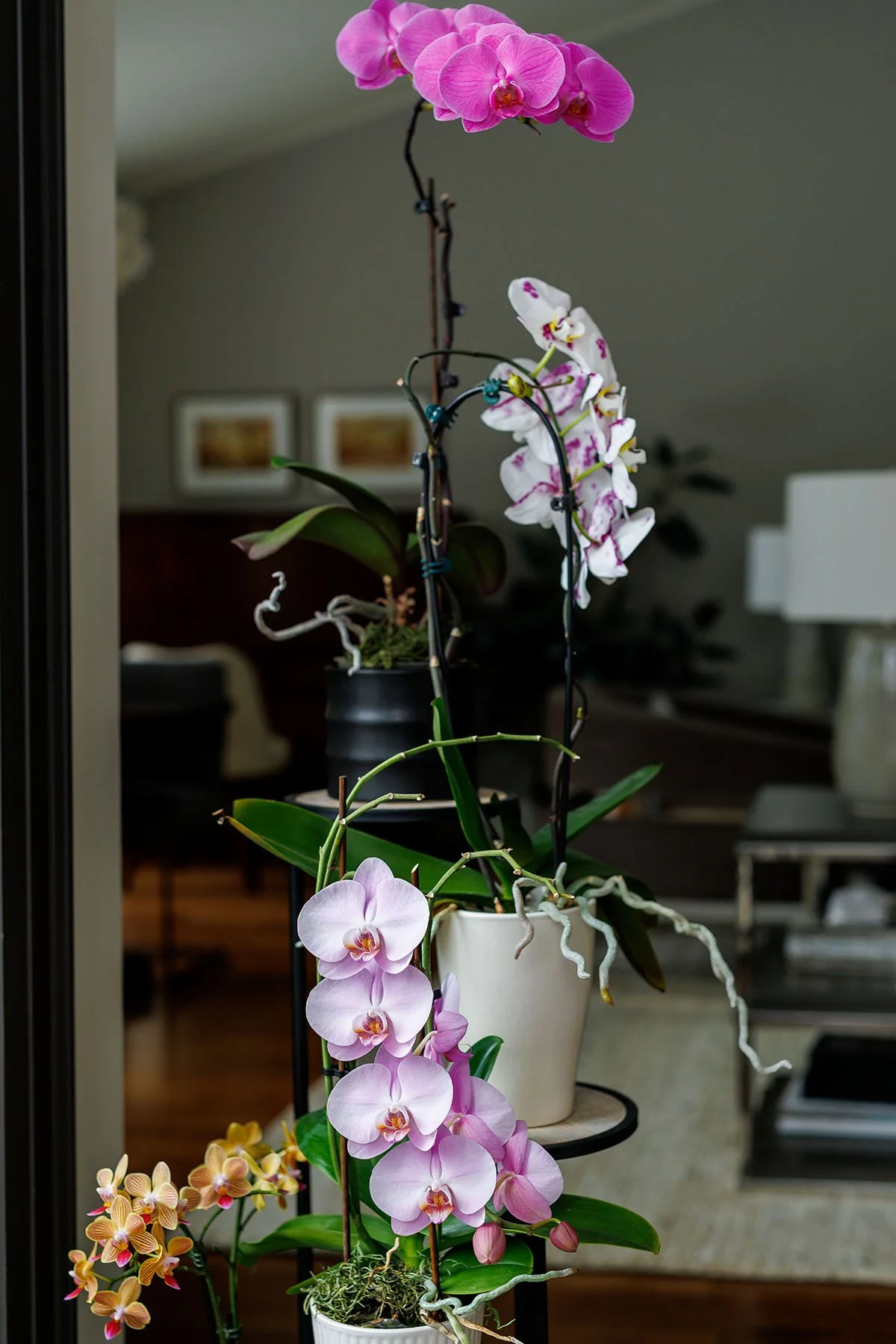
And one more thing: do not let the garden going dormant mean the end of green inside your home. Houseplants, seasonal branches, a collection of orchids on a windowsill — living things inside the home are a quiet counterpoint to the grey outside. I have accumulated quite an orchid collection over the years, and in winter they become the focal point of every room they are in.
Lean Into the Season
I know. By February we will all be dreaming of warmth. But right now, in this early stretch of winter, there is something genuinely lovely about the shift. The fireside chair with a great book. A board game with loved ones after a long walk in the cold. The feeling of coming home to a space that has been prepared to hold you.
Winter is not something to endure. In a home that has been thoughtfully layered, it is something to savour.
Winter is not something to endure. In a home that has been thoughtfully layered, it is something to savour.
If your home is not quite giving you that feeling yet — if the spaces where you spend your evenings could use a professional eye — I would love to hear from you. Begin a conversation or reach out at gaddah@yasseininteriors.com.